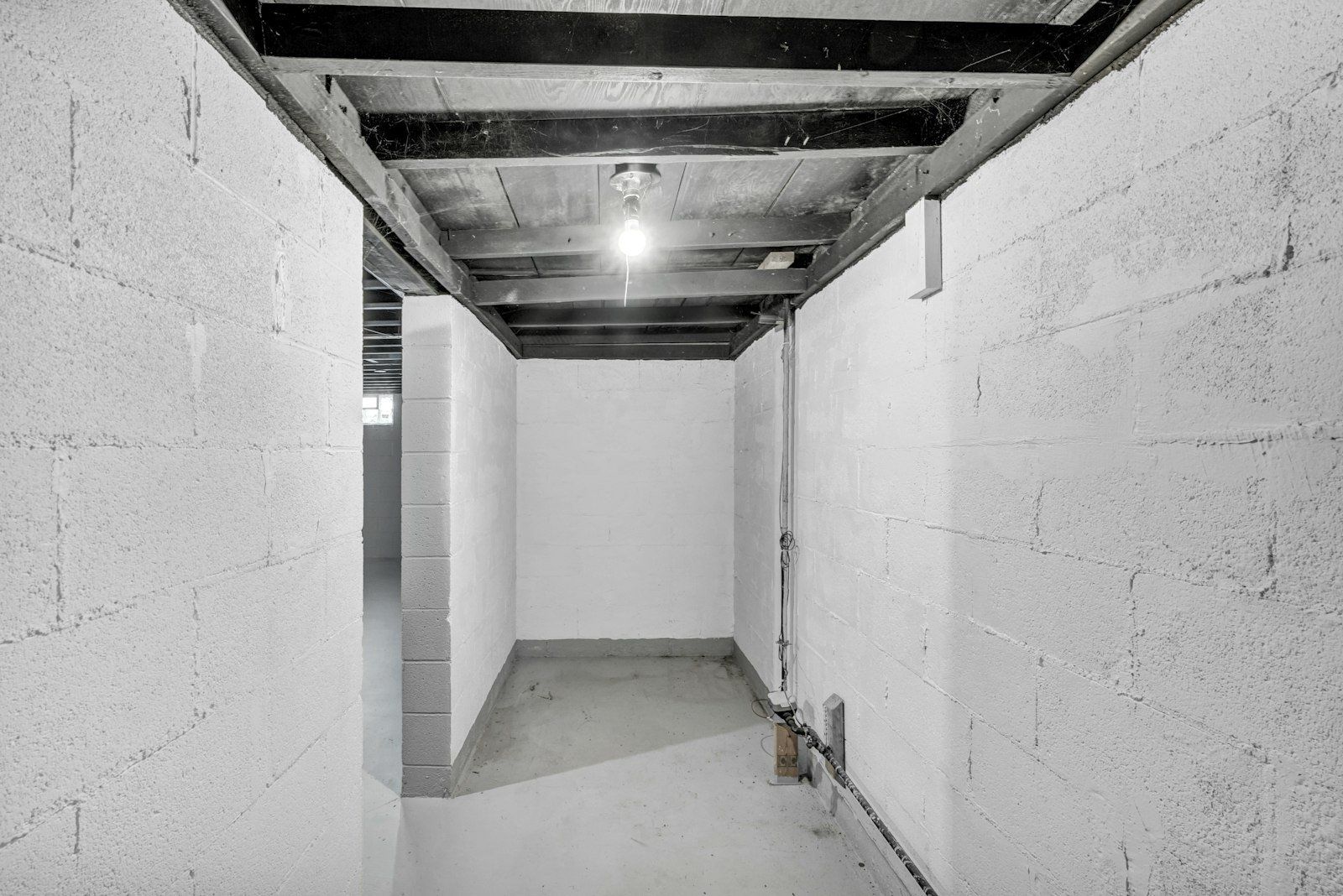
How basement cleanup usually goes
- Pump out standing water. Deep water gets a submersible pump; shallow water gets an extractor.
- Figure out whether the water came from outside, from the sewer, or from a supply line. That decides how much has to be thrown away.
- Pull wet carpet, pad and the bottom of drywall in finished basements. Most crews cut drywall a foot or two above the water line.
- Clean and treat hard surfaces, especially after outside water or sewage.
- Dry the space with dehumidifiers and air movers, then check readings until the framing and slab are back to normal.
If your sump pump failed, mention it on the call. Many crews can get a plumber or pump installer out the same week so it does not happen again with the next storm.
Finished basements need more care
Carpet over a concrete slab, framed walls and a drop ceiling all trap moisture. A finished basement that looks dry on the surface after two days of fans can still be wet in the bottom plate of the walls. That is where mold starts. Ask the crew to show you their moisture readings before they pull equipment.
What to tell us when you call
- Where the water is coming from, if you know (pipe, water heater, washer, toilet, sump, rain).
- Whether it is clean water or sewage.
- Which rooms and floors are wet, and roughly how long it has been wet.
- Whether the water is shut off and the power to wet rooms is off.
- Your street or nearest cross street in Lawrence, so the right local crew picks up.
Stay on the line for a couple of minutes. That is usually all it takes to get matched with a local company that can send someone out.
Free to call. No obligation to hire anyone.
Why Lawrence basements take on water
The Kansas River sets a lot of the story here. After the 1951 flood put much of North Lawrence underwater, a levee went up along the north bank. The city now owns and maintains that levee, which runs about 11.5 miles along the river and Mud Creek. The levee holds back the river, but heavy rain still has to drain out of North Lawrence, and when the river is high that water can back up into streets and low basements.
South of the river, the older neighborhoods have a lot of basements built from stone or block with little or no drain tile. Water finds the joints during a long soaking rain. Newer subdivisions on the west side have poured walls and sump pits, so the usual failure there is the pump: a stuck float, a tripped breaker, or a power outage during the same storm that is filling the pit.
The city has been working on a stormwater plan for heavier rainstorms, but that does not help a basement that is wet tonight. If you are pumping water and losing ground, call now and get a crew on the way while you keep at it.